
Engineering solutions to waste management are critical for both environmental sustainability and operational efficiency in industries like construction. By implementing innovative methods and technologies, companies can minimize their ecological footprint while enhancing project effectiveness.
The importance of integrating engineering solutions into waste management cannot be overstressed. Effective waste management not only complies with regulatory requirements but also poses significant economic benefits through materials savings and enhanced reputation. Moreover, engineering industries are uniquely positioned to influence waste management practices due to their technical expertise and innovative capabilities.
Sustainability is at the heart of modern engineering practices. It’s about creating systems that not only meet today’s needs without compromising future generations but also actively reduce waste and pollution. Engineering solutions that prioritize reuse, recycling, and waste minimization contribute significantly to sustainable development goals.
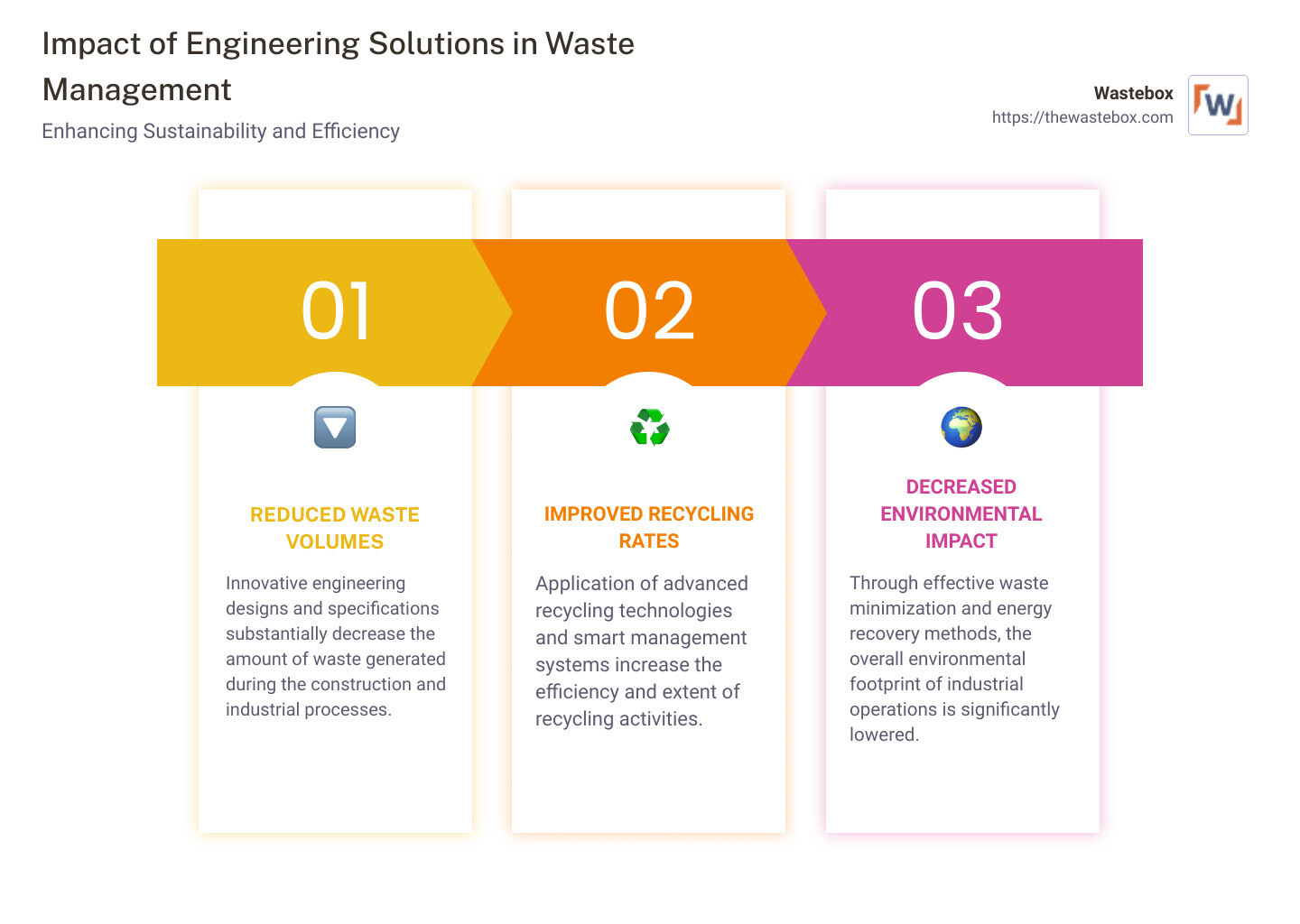
Engineering Solutions to Waste Management: Prevention and Minimization
Design Innovations for Waste Reduction
In the realm of engineering, the design phase holds critical importance in waste management. By integrating waste reduction strategies right from the start, engineers can significantly diminish the environmental impact of production and construction processes.
- Efficient Structures: Modern engineering leverages advanced software to simulate and optimize the design of structures. This can lead to significant material savings by ensuring that only the necessary amount of materials is used. For example, the use of high-strength, lightweight materials can reduce the quantity of material needed without compromising structural integrity.
- Material Savings: Innovations such as precision cutting technology minimize offcuts in materials like wood and metal. The integration of 3D printing also allows for exact amounts of materials to be used, reducing waste at the source.
These strategies not only prevent waste but also lower the cost of projects by reducing the amount of raw materials used and waste produced.
Specification Strategies to Avoid Waste
Specification plays a pivotal role in the minimization of waste. By specifying materials and processes that reduce waste, engineers can significantly influence the sustainability of projects.
- Tight Specifications: Engineers can design projects to exact specifications which helps in minimizing waste during construction. This involves detailed planning and using materials that can be efficiently measured and cut to reduce leftovers.
- Recycled Materials: Utilizing recycled materials in new constructions or manufacturing processes is a powerful method of minimizing waste. For example, using recycled glass or plastic in the making of new products not only reduces the demand for virgin materials but also decreases the amount of waste going to landfill.
By focusing on these areas, engineering can lead to more sustainable production and construction practices, aligning with global efforts to reduce waste and enhance environmental conservation. This approach not only supports the environment but also promotes economic efficiency by reducing materials costs and waste management expenses. Moving forward, these strategies will be integral in meeting both industry and global sustainability targets.
Recycling and Reuse: Engineering a Circular Economy
Advanced Recycling Technologies
In the quest to create a more sustainable world, advanced recycling technologies have become a cornerstone of engineering solutions to waste management. One of the most promising innovations in this field is the development of AI-driven enzymes designed to break down plastics into their fundamental components. As reported by Forbes, these enzymes can efficiently decompose plastic waste within hours, offering a low-energy and low-emission process that aligns with environmental sustainability goals.
The technology not only breaks down plastics but also allows for the recycling of the byproducts into new, useful materials. This method exemplifies a circular economy approach, turning what would be waste into valuable resources. The process is not just about recycling but redefining how we manage waste from its inception to its re-entry into the supply chain.
Successful Reuse Models
Reusing materials plays a critical role in reducing waste and conserving resources. In the construction industry, materials such as concrete, asphalt, masonry, and steel are often reused to minimize waste. These materials can be processed minimally and reincorporated into new construction projects, which significantly reduces the environmental impact compared to using new materials.
Industries also see substantial benefits from reusing by-products. For instance, metal industries recover copper and nickel from finishing processes, and solvent recovery is common in chemical processing. These practices not only prevent waste from entering landfills but also reduce the demand for virgin materials, thus conserving natural resources and energy.
Engineering a circular economy is not just about recycling but creating systems where material reuse becomes a default practice. This approach requires innovative thinking and collaboration across various sectors to implement systems that facilitate the easy recovery and reuse of materials.
By integrating advanced recycling technologies and successful reuse models, engineering can significantly contribute to sustainable waste management. This shift towards a circular economy not only supports environmental goals but also enhances economic viability by turning waste into a resource. Moving forward, the focus will be on expanding these technologies and models to further reduce the environmental footprint of waste management.
Innovative Waste-to-Energy Solutions
Biogas and Anaerobic Digestion
Turning Waste into Energy with Biogas: Biogas production through anaerobic digestion is a standout method where organic waste is broken down without oxygen. This process turns materials like food scraps, agricultural waste, and sewage sludge into biogas, primarily composed of methane and carbon dioxide. Methane, a potent greenhouse gas, can be harnessed as a clean energy source, providing a sustainable alternative to fossil fuels.
- How it works: In anaerobic digesters, microorganisms feed on biodegradable material in a controlled, oxygen-free environment. As they digest the organic material, these microbes produce biogas.
- Energy generation: The captured biogas can be used to generate electricity, heat, or can be upgraded to natural gas quality for various uses including fuel.
Benefits:
– Reduces greenhouse gas emissions by capturing methane.
– Generates renewable energy from waste materials.
– Helps in managing waste effectively, reducing the reliance on landfilling.
High-Efficiency Incineration Technologies
Clean Incineration for Energy Recovery: Incineration involves burning waste materials at high temperatures, reducing their volume and mass significantly. Modern high-efficiency incineration technologies not only dispose of waste but also recover energy in the process.
- Process: Waste is combusted in a controlled environment, generating heat. This heat turns water into steam, which drives turbines to produce electricity.
- Energy recovery: The energy produced during incineration can be substantial, contributing to the local power supply and reducing the need for energy from non-renewable sources.
Advancements in Technology:
– Clean incineration: Newer incineration plants are equipped with advanced emission control technologies that minimize the release of harmful pollutants. This includes filters and scrubbers that capture airborne particles and toxic chemicals like dioxin, cadmium, and lead, ensuring that emissions meet environmental standards.
– Efficiency: Modern incinerators are designed to achieve higher thermal efficiency, meaning they can convert more of the waste’s energy content into usable electricity or heat.
Environmental Impact:
– Significantly reduces the volume of waste, decreasing landfill use.
– Generates energy, contributing to a reduction in the use of fossil fuels.
Case Study: In countries like Sweden and Denmark, incineration plants not only efficiently manage municipal waste but also provide district heating and electricity, showcasing an integrated approach to waste management and energy production.
In conclusion, engineering solutions to waste management such as biogas production through anaerobic digestion and high-efficiency incineration technologies play a crucial role in modern waste management strategies. These methods not only help in managing waste but also contribute to energy generation, showcasing a sustainable path forward in waste management. By converting waste into valuable energy, these technologies underscore the potential of waste as a resource, aligning with global sustainability goals. Moving forward, the integration of these technologies will be pivotal in addressing both waste management and energy production challenges.
Smart Waste Management Systems: The Role of Technology
As we explore the next phase of waste management, technology plays a pivotal role. Smart waste management systems leverage innovative technologies like the Internet of Things (IoT), Artificial Intelligence (AI), and various sensors. These technologies not only streamline operations but also enhance the efficiency and effectiveness of waste management practices.
Implementation of IoT in Waste Management
IoT technology is transforming how we manage waste by introducing real-time tracking and significant efficiency improvements. Here’s how:
- Data-Driven Collection: IoT sensors in waste bins and dumpsters provide real-time data on fill levels. This information allows for dynamic scheduling of waste collection, ensuring trucks are dispatched only when necessary. This not only saves fuel but also reduces emissions and operational costs.
- Route Optimization: With real-time data, waste collection routes can be optimized to avoid unnecessary trips, thus minimizing the time and resources spent on the road.
- Enhanced Accountability: IoT devices help monitor the waste management process at every stage, providing transparency and improving service delivery.
One notable example is the use of waste level sensors in community bins. These sensors relay fill-level information to central systems that can dynamically adjust collection schedules, ensuring that bins are emptied just in time to prevent overflow and reduce community health hazards.
AI and Automation in Recycling
AI and automation introduce groundbreaking changes in recycling processes, making them more efficient and less reliant on manual labor. Here are key areas where AI is making an impact:
- AI Sorting Robots: In recycling facilities, AI-powered robots can identify and sort recyclables more accurately than humans. This technology speeds up the sorting process and increases the purity of recycling streams, making the recycled materials more valuable.
- Automated Facilities: AI enhances the automation of entire recycling facilities, improving operational efficiency and reducing costs. Automated systems can manage and control various processes from sorting to packaging, minimizing human error and increasing throughput.
For instance, companies like AMP Robotics use AI-driven systems to enhance sorting accuracy in recycling centers. These robots can rapidly identify different materials on a conveyor belt, sorting them into appropriate categories for further processing. This not only speeds up the process but also significantly cuts down on contamination, which is a major issue in recycling.
By integrating these advanced technologies, engineering solutions to waste management are not only about dealing with waste more effectively but also about redefining what can be achieved in terms of resource recovery and environmental protection. The next section will delve deeper into frequently asked questions about these engineering solutions, helping to clarify common queries and expand understanding of this crucial field.
Frequently Asked Questions about Engineering Solutions to Waste Management
How can engineers help waste management?
Engineers play a crucial role in developing innovative solutions that reduce, manage, and treat waste. They design systems and processes that minimize waste production right from the initial stages of manufacturing. Engineers also develop technologies to treat and recycle waste more efficiently. By applying principles of sustainability and innovation, engineers help create systems that not only manage waste but also turn it into valuable resources.
What are the 5 solutions of waste management?
- Prevention: Designing products and processes that generate less waste.
- Minimization: Reducing the volume and toxicity of waste generated.
- Recycling and Reuse: Transforming waste materials into new products or reusing them in other forms.
- Energy Recovery: Converting waste into usable energy through methods like incineration or biogas production.
- Treatment and Disposal: Safely treating and disposing of residual waste that cannot be recovered or recycled.
How to reduce waste in engineering?
- Design for the Environment: Engineers can incorporate environmental considerations in the design phase to minimize waste.
- Material Substitution: Using less hazardous and more sustainable materials can reduce waste production.
- Process Optimization: Improving manufacturing and industrial processes to decrease waste output.
- Extended Producer Responsibility: Encouraging companies to take responsibility for the entire lifecycle of their products, including disposal.
- Innovative Recycling Technologies: Developing and implementing advanced technologies that allow for greater recovery and reuse of materials.
By addressing these questions, engineers can lead the way in transforming waste management from a linear to a more circular and sustainable model. This shift not only helps reduce environmental impact but also enhances resource efficiency. The next section will explore how these engineering solutions are implemented across various industries and their impact on global waste management practices.
Conclusion
As we look toward the future, the role of engineering in developing sustainable waste solutions becomes increasingly crucial. At Wastebox, we are committed to leading the charge in innovative waste management practices that not only meet today’s needs but also set the foundation for a more sustainable tomorrow.
Future Outlook
The future of waste management is bright with promising engineering solutions that focus on sustainability and efficiency. From advanced recycling technologies to smart waste management systems, the potential to revolutionize the industry is immense. Engineers are continuously working on developing methods that minimize waste production, enhance recycling processes, and convert waste into energy effectively.
In the coming years, we anticipate a significant shift towards more integrated and technologically advanced waste management systems. These systems will likely incorporate AI, IoT, and other cutting-edge technologies to streamline operations and reduce environmental impact. The goal is to create a fully circular economy where nearly all waste materials are repurposed, recycled, or converted into energy.
Wastebox’s Role
At Wastebox, our mission is to innovate and implement waste management solutions that are not only effective but also environmentally responsible. We are dedicated to enhancing the way waste is collected, sorted, and processed, ensuring that we lead by example in the industry. Our services are designed to support the community’s needs while setting new standards for sustainability and efficiency.
Community Impact
The impact of engineering solutions to waste management extends far beyond the confines of the industry. These innovations contribute significantly to community well-being by promoting environmental sustainability, reducing landfill use, and conserving natural resources. Moreover, by adopting more efficient waste management practices, communities can enjoy cleaner environments, reduced pollution levels, and enhanced public health.
Wastebox is proud to be a part of this transformative journey. By collaborating with engineers, community leaders, and other stakeholders, we are not just managing waste; we are empowering communities, fostering sustainable practices, and paving the way for a greener future.
In conclusion, the integration of advanced engineering solutions in waste management holds the key to addressing many of the environmental challenges we face today. With a commitment to innovation and sustainability, Wastebox is excited to be at the forefront of this industry evolution, making a positive impact on communities and the environment alike. Together, we can build a sustainable future where waste is not merely discarded but is a valuable resource that contributes to economic and environmental prosperity.