
Introduction
When it comes to environmental solutions and waste management, understanding how to manage waste sustainably is crucial. This guide aims to provide you with direct and straightforward insights into enhancing your eco-friendliness and efficiency in waste handling.
- Sustainability involves using methods that do not completely use up or destroy natural resources.
- Waste Management is the collection, transportation, and disposal of garbage, sewage, and other waste products in a way that best protects human health and the environment.
With pressures to meet project deadlines and manage costs effectively, construction project managers like you need reliable solutions that not only help keep your site clean but also adhere to environmental regulations.
We will explore basic yet impactful practices that can transform waste management from a chore to a contribution towards a cleaner, sustainable future. Let’s delve into the sustainable strategies that keep your projects on track and the environment intact.
Environmental Solutions and Waste Management: Understanding the Basics
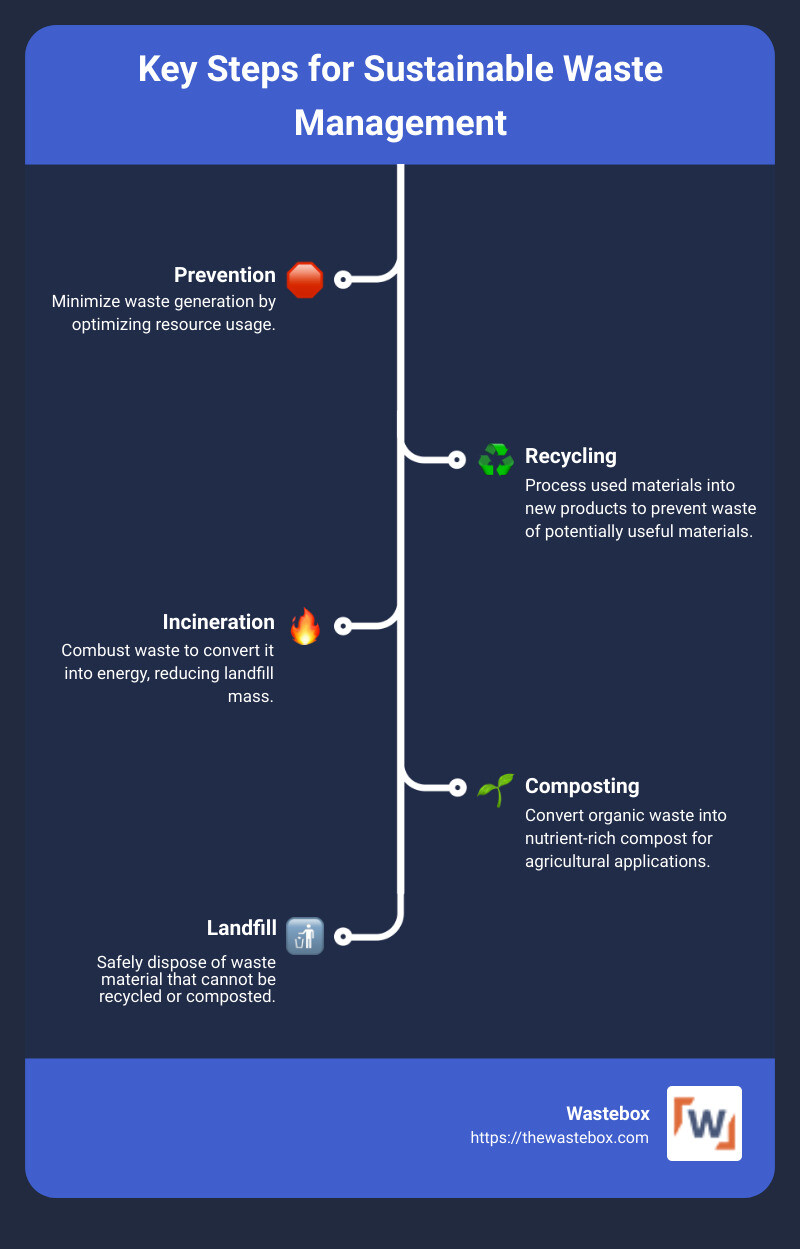
In the realm of environmental solutions and waste management, understanding the basic methods is crucial. These methods include Prevention, Recycling, Incineration, Composting, and the use of Landfills. Each plays a vital role in reducing the environmental impact of waste.
Prevention
The most effective way to manage waste is to not create it in the first place. Prevention strategies involve designing products and processes that minimize waste. This can be achieved through better materials, smarter product designs, and more efficient practices. For instance, reducing packaging or using recyclable materials can significantly cut down waste production.
Recycling
Recycling turns materials that would otherwise become waste into valuable resources. It involves collecting and processing materials like paper, glass, plastic, and metals. By recycling, we reduce the need for new raw materials, save energy, and decrease greenhouse gas emissions. As highlighted by VLS, innovative recycling programs are key to sustainable waste management.
Incineration
Incineration involves burning waste materials to reduce their volume and produce energy. Modern incineration facilities can convert waste into electricity or heat, contributing to energy recovery. For example, cities like Singapore have adopted incineration to manage their limited landfill space while generating energy.
Composting
Composting is the biological decomposition of organic waste such as food scraps and yard waste. It turns waste into a nutrient-rich soil additive, promoting soil health and reducing the need for chemical fertilizers. Composting not only recycles organic waste but also reduces methane emissions from landfills.
Landfill
Despite efforts to reduce, reuse, and recycle, some waste still ends up in landfills. Modern landfills are designed to minimize their environmental impact. They use liners and other engineering techniques to prevent contamination of groundwater and soil. Methane capture technologies can also transform this potent greenhouse gas into a usable energy source.
By integrating these fundamental practices, businesses and communities can significantly enhance their waste management systems, leading directly into innovative technologies that further support waste reduction and sustainability.
Innovative Technologies in Waste Management
As we transition from traditional waste management methods to more advanced techniques, it’s crucial to explore the role of innovative technologies that make waste management more efficient and less environmentally damaging. Here, we delve into mobile apps, segregation technologies, and cost-effective solutions that are changing the landscape of waste management.
Mobile Apps
The integration of mobile apps in waste management has revolutionized how cities and companies handle waste. These apps enhance efficiency by automating schedules for waste collection and enabling real-time tracking of waste streams. For example, users can report issues like missed pickups directly through the app, ensuring quick resolution and maintaining cleanliness. Moreover, these apps often feature educational tools that help users sort their waste correctly, which is crucial for effective recycling and waste reduction.
Segregation Technologies
Proper segregation of waste is the cornerstone of effective recycling and waste management. Innovations such as automated sorting lines and waste-sorting robots have made significant strides in this area. Facilities like those operated by ZenRobotics in Helsinki use robots to sort both heavy materials like construction debris and lighter, household wastes. These robots work continuously, increasing the volume of waste that can be sorted and recycled, reducing the amount that ends up in landfills.
Cost-effective Solutions
Investing in technology might seem expensive, but many of these innovations are designed to be cost-effective in the long run. For instance, the automation of waste segregation and the use of mobile apps for efficient waste collection scheduling can significantly reduce the manpower needed, thus lowering operational costs. Furthermore, technologies that convert waste to energy or other reusable materials can turn what would be an expense into a revenue stream, showcasing the economic benefits of investing in advanced waste management technologies.
These innovative technologies not only support environmental solutions and waste management but also offer scalable, efficient, and effective ways to manage waste, which is essential for both our planet and our economies. By adopting these technologies, waste management companies can ensure that they are part of the solution to today’s environmental challenges.
Continuing on this path leads us to consider eco-friendly practices that can further reduce waste…
Eco-Friendly Practices for Reducing Waste
In the journey towards sustainability, reducing waste is a critical step. Here, we explore practical measures that can significantly cut down on consumer waste, the use of single-use plastics, and encourage the adoption of reusable products.
Consumer Waste: Simple Steps to Big Changes
Consumer waste encompasses all waste generated by individuals, from packaging to food scraps. Reducing this starts with mindful consumption:
– Buy Less: Only purchase what you need. This reduces waste at the source.
– Choose Bulk: Opt for bulk items or those with minimal packaging to decrease packaging waste.
– Repurpose and Repair: Before throwing things away, consider if they can be repaired or repurposed.
These simple steps can lead to significant reductions in the waste that each individual contributes to landfills.
Single-use Plastics: A Persistent Problem
Single-use plastics are a notorious waste issue, often used once and discarded. They persist in the environment, harming wildlife and ecosystems. To combat this:
– Avoid Plastic Straws and Cutlery: Opt for alternatives made from bamboo or stainless steel.
– Use Cloth Bags: Replace plastic shopping bags with cloth or canvas bags that can be reused multiple times.
– Choose Cardboard over Plastic: Cardboard is more easily recycled and degrades faster than plastic.
By making these choices, consumers can drastically reduce their plastic footprint.
Reusable Products: The Sustainable Swap
Switching to reusable products is an effective way to cut down on waste. Here are a few swaps that can make a big difference:
– Water Bottles: Use a reusable water bottle instead of buying bottled water.
– Coffee Cups: Bring a reusable cup when you purchase coffee.
– Food Storage: Use containers that can be reused instead of single-use plastic wraps or bags.

These changes, while small on an individual level, can add up to significant environmental impacts when adopted on a larger scale.
By integrating these eco-friendly practices, individuals and communities can play a crucial role in reducing waste. As we continue to explore these sustainable pathways, the next section will delve into how waste-to-energy technologies are transforming trash into valuable energy resources, further advancing our environmental solutions and waste management efforts.
Waste-to-Energy: Turning Trash into Treasure
In recent years, Waste-to-Energy (WTE) systems have emerged as a pivotal technology in environmental solutions and waste management. These systems are designed to convert non-recyclable waste materials into usable heat, electricity, or fuel through a variety of processes, including combustion, gasification, pyrolysis, anaerobic digestion, and landfill gas recovery.
Understanding WTE Systems
WTE systems primarily use thermal technologies to incinerate waste. This process significantly reduces the volume of waste, cuts down methane emissions from landfills, and generates energy, which can be used to power homes and industries. For instance, the world’s largest waste-to-energy facility in Singapore is a notable example, showcasing how urban centers can manage waste and generate energy simultaneously. Read more about the Singapore facility.
Impact on Fossil Fuels
By converting waste into energy, WTE systems offer a dual benefit: reducing reliance on fossil fuels and managing waste effectively. Traditional waste disposal methods like landfills and the burning of fossil fuels for energy are known for their significant environmental footprints, primarily due to high greenhouse gas emissions. WTE technologies can mitigate these impacts by providing a renewable energy source. For example, the integration of WTE in Southeast Asia is projected to grow significantly, potentially reaching a market value of $13.66 billion by 2023, as these regions seek sustainable energy solutions. Read about the market growth.
WTE as an Energy Solution
WTE not only supports waste reduction but also contributes to energy production, presenting a robust solution to manage municipal solid waste (MSW) while generating electricity. This method is particularly vital in densely populated areas where landfill space is limited, and energy demand is high. Projects like the one in Fortaleza, Brazil, where methane from landfills is captured and refined to produce energy, underscore the potential of turning waste management into energy production hubs. Learn more about Fortaleza’s initiative.
These systems are not just about disposing of waste; they symbolize a shift towards a circular economy, where waste is seen not as an end-product but as a resource that offers economic and environmental benefits. As we look to the future, the expansion of WTE technologies will play a crucial role in both waste management and renewable energy landscapes, proving that what was once considered trash can indeed become a valuable treasure.
In the next section, we will explore the importance of community involvement in waste management and how collective actions can lead to effective and scalable environmental solutions.
Community Involvement and Waste Management
Community Support
In the realm of environmental solutions and waste management, the role of community support cannot be overstated. Successful waste management practices thrive on the active participation of local communities. For instance, programs that encourage recycling and proper waste segregation see higher success rates when communities are engaged and informed. Educational campaigns and community-driven initiatives, such as neighborhood clean-up days, significantly enhance public awareness and participation.
Work Conditions
Ensuring safe and healthy work conditions in waste management operations is crucial. This not only pertains to those directly employed in the sector but also affects the broader community. Proper training, equipment, and regulatory compliance reduce health risks and improve the overall efficiency of waste management services. For example, companies like Wastebox are committed to maintaining high safety standards, which is vital for both employee well-being and operational success.
Scalable Solutions
Scalable solutions in waste management are essential for adapting to the varying needs of different communities. What works in a small town might not be suitable for a bustling city. For instance, the introduction of large-scale recycling facilities might be more applicable to urban areas, while smaller, community-focused strategies could be more effective in rural regions. Solutions must be adaptable and scalable to ensure they can meet the growing and changing demands of global waste management.
As we continue to explore the dynamics of waste management, it becomes clear that community involvement is not just beneficial but necessary for the sustainability of environmental solutions. By fostering a collaborative environment, we can ensure that waste management practices are not only effective but also inclusive, leading to a cleaner, safer future for all.
Frequently Asked Questions about Environmental Solutions and Waste Management
What are the 5 solutions of waste management?
The five primary solutions for effective waste management include:
- Prevention: This involves strategies to reduce waste before it is even created. Implementing design changes, reducing materials in manufacturing, and using less packaging are all preventative measures.
- Recycling: Turning used materials into new products to prevent waste of potentially useful materials helps reduce consumption of fresh raw materials and energy usage.
- Incineration: Burning waste can generate energy while reducing the volume of waste. However, it must be managed carefully to control emissions and reduce environmental impact.
- Composting: Organic waste such as food scraps and yard waste can be converted into a valuable organic fertilizer, improving soil health and reducing reliance on chemical fertilizers.
- Landfill: The oldest form of waste treatment, though it’s the least sustainable. Modern landfills are designed to minimize pollution and capture gases like methane for energy.
What does waste management do for the environment?
Effective waste management can significantly benefit the environment by:
- Resource Conservation: Recycling and reusing materials mean less raw material is needed, which conserves natural resources and reduces habitat destruction.
- Reduce Expenses: Efficient waste management reduces the costs associated with waste disposal and treatment, as well as the long-term costs of environmental remediation and pollution control.
- Lower Contamination: Proper disposal and treatment of waste help prevent contaminants from polluting the soil, water, and air, protecting ecosystems and human health.
Who owns R360 environmental solutions?
R360 Environmental Solutions is owned by Waste Connections, a major player in North America’s waste management industry. Waste Connections is known for providing comprehensive waste and recycling services, focusing on safety, sustainability, and customer service.
These solutions and practices in environmental solutions and waste management are crucial for sustaining our planet. They not only help in keeping our surroundings clean but also play a significant role in the conservation of resources and the overall health of ecosystems. Integrating these practices will be essential for long-term environmental sustainability.
Conclusion
As we wrap up our discussion on environmental solutions and waste management, highlight the role of local businesses like Wastebox in driving sustainability forward. Located in the heart of Memphis, TN, Wastebox has become a cornerstone in the community for providing efficient and eco-friendly waste management solutions.
Wastebox specializes in offering a wide range of services tailored to meet the needs of various sectors, including construction and industrial clients. Our expertise in managing waste effectively comes from over 20 years of dedicated service, ensuring that we not only meet but exceed the expectations of those we serve.
One of our standout offerings is the provision of roll-off dumpsters. These containers are crucial for managing large volumes of waste, particularly in construction and demolition projects. We offer 15-, 20-, and 30-yard roll-off dumpsters, which are easy to use and even easier to schedule. With next-day delivery available, our clients can maintain momentum on their projects without worrying about waste accumulation.
Moreover, our hauling services are designed to be as convenient as they are comprehensive. Whether it’s routine waste collection or emergency responses to unexpected situations, Wastebox is equipped to handle it all. Our fleet of vehicles and dedicated team ensure that waste is not just removed from your site, but managed in a way that prioritizes environmental responsibility.
At Wastebox, we are committed to more than just waste management; we are dedicated to fostering sustainable practices that benefit our community and the environment. By choosing our services, you are not just cleaning up your site, but you are also contributing to a larger movement towards sustainability.
For more detailed information on how we can assist with your waste management needs and help you contribute to a greener future, please visit our services page.
Together, we can make a significant impact on the environment, one project at a time. Let’s continue to work towards making our planet a cleaner, safer, and more sustainable place for future generations.